Hydraulic Pump Types Explained: Piston, Vane and Gear Pumps
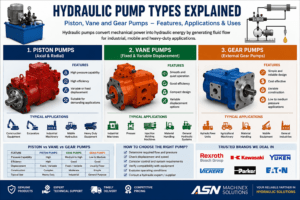
Hydraulic pumps are essential components of hydraulic systems used in industrial machinery, construction equipment, mobile machinery and manufacturing applications. They convert mechanical power into hydraulic energy by generating fluid flow that can be used to operate hydraulic cylinders, motors and other components. Different hydraulic pump designs offer different combinations of flow, pressure, efficiency, control and durability. Understanding the main hydraulic pump types can help businesses select the right solution for their equipment and operating requirements. Asn Machinex Solutions is a hydraulic equipment supplier providing hydraulic pumps, motors, valves and related components for industrial and mobile applications. The available product range includes axial piston pumps, variable displacement pumps, vane pumps and other hydraulic solutions. What Is a Hydraulic Pump? A hydraulic pump is a mechanical device that creates hydraulic fluid flow within a hydraulic system. The pump receives mechanical power from an engine, electric motor or other power source and transfers that energy to hydraulic fluid. The resulting fluid flow is directed through valves and other hydraulic components to perform useful work. Hydraulic pumps are commonly used in: The correct pump depends on the pressure, flow, displacement, control requirements and application. How Does a Hydraulic Pump Work? Most hydraulic pumps operate by creating a low-pressure inlet area that allows hydraulic fluid to enter the pump. Internal components then move or displace the fluid and deliver it through the outlet at the required flow. The pump itself primarily creates fluid flow. System pressure develops as the fluid encounters resistance from the hydraulic circuit, actuators and other components. Pump performance can be influenced by factors such as: Main Types of Hydraulic Pumps The most common hydraulic pump types include: Each design has different characteristics and is suitable for different hydraulic applications. 1. Piston Hydraulic Pumps Piston pumps use reciprocating pistons to move hydraulic fluid. They are widely used where higher pressure, efficiency and variable flow control are required. Piston pumps can be divided into several configurations, including axial piston pumps and radial piston pumps. Axial Piston Pumps In an axial piston pump, the pistons are arranged parallel to the drive shaft. Depending on the design, the pump may provide fixed or variable displacement. Axial piston pumps are commonly used in demanding hydraulic systems because they can provide high pressure and efficient operation when correctly selected and maintained. Common applications include: Asn Machinex Solutions supplies various axial piston pump solutions, including Kawasaki and Rexroth-related hydraulic pump products. Variable Displacement Piston Pumps Variable displacement pumps allow the pump displacement to be adjusted according to system requirements. This can help regulate flow and improve energy efficiency in suitable hydraulic applications. Rexroth A10VO, A10VSO, A4VG, A2FO-6x, A11V0, A8VO, and other axial piston pump series are examples of hydraulic pump solutions designed for different applications and system requirements. 2. Hydraulic Vane Pumps Vane pumps use vanes mounted in a rotating rotor to move hydraulic fluid. As the rotor turns, the vanes move within the pump housing and create chambers that transport fluid from the inlet to the outlet. Hydraulic vane pumps can offer smooth operation and are used in various industrial hydraulic applications. Variable Vane Pumps Variable vane pumps allow displacement to change according to operating requirements. The PV7 series is an example of a variable vane pump range used in suitable hydraulic applications. When selecting a vane pump, it is important to consider: 3. Hydraulic Gear Pumps Gear pumps use rotating gears to transport hydraulic fluid from the inlet to the outlet. They are generally known for their straightforward construction and reliable operation. Gear pumps are commonly used in applications where a simple and dependable hydraulic flow solution is required. Typical applications may include: The correct gear pump should be selected according to the required flow, pressure, speed, displacement and application conditions. Piston Pump vs Vane Pump vs Gear Pump Choosing between piston, vane and gear pumps depends on the requirements of the hydraulic system. Feature Piston Pump Vane Pump Gear Pump Pressure capability Generally high Moderate to high depending on design Generally low to moderate Efficiency Generally high Good Good for suitable applications Flow control Fixed or variable Fixed or variable Usually fixed Construction More complex Moderate Relatively simple Typical applications Heavy-duty and high-pressure systems Industrial hydraulic systems General hydraulic applications Actual performance varies according to the specific pump model and manufacturer’s specifications. Fixed Displacement vs Variable Displacement Pumps Another important difference between hydraulic pumps is displacement control. Fixed Displacement Pump A fixed displacement pump delivers a predetermined volume of fluid per revolution. Flow can still vary with pump speed, but the displacement itself remains fixed. Fixed displacement pumps can be suitable for simpler hydraulic circuits and applications with relatively consistent flow requirements. Variable Displacement Pump A variable displacement pump can adjust its displacement during operation. This allows hydraulic flow to be matched more closely to system demand. Variable displacement pumps are often used in applications where hydraulic efficiency, flow control and changing load requirements are important. How to Choose the Right Hydraulic Pump Selecting the correct hydraulic pump requires careful consideration of the complete hydraulic system. 1. Determine Required Flow Calculate the flow required by the hydraulic actuators and other components. Insufficient flow can reduce machine performance, while excessive flow may increase energy consumption and heat generation. 2. Check Operating Pressure Identify the normal operating pressure and maximum pressure of the system. The selected pump must be suitable for the required operating conditions. 3. Select the Correct Displacement Pump displacement determines how much fluid is moved per revolution. Choose a suitable displacement based on the required flow and pump speed. 4. Consider Pump Speed Check the required operating speed and ensure that the pump is suitable for the machine’s drive system. 5. Check Control Requirements Some hydraulic systems require pressure compensation, load sensing or other control arrangements. The pump should match the hydraulic circuit. 6. Consider the Application Construction equipment, industrial machinery and mobile hydraulic systems can have very different requirements. The pump should be selected according to the actual application. 7. Verify Compatibility Before ordering a replacement hydraulic pump, verify: Common Hydraulic Pump Applications Hydraulic pumps are used across … Continue reading Hydraulic Pump Types Explained: Piston, Vane and Gear Pumps
